Million dollar outlines, p.1
Million Dollar Outlines, page 1


Book Description
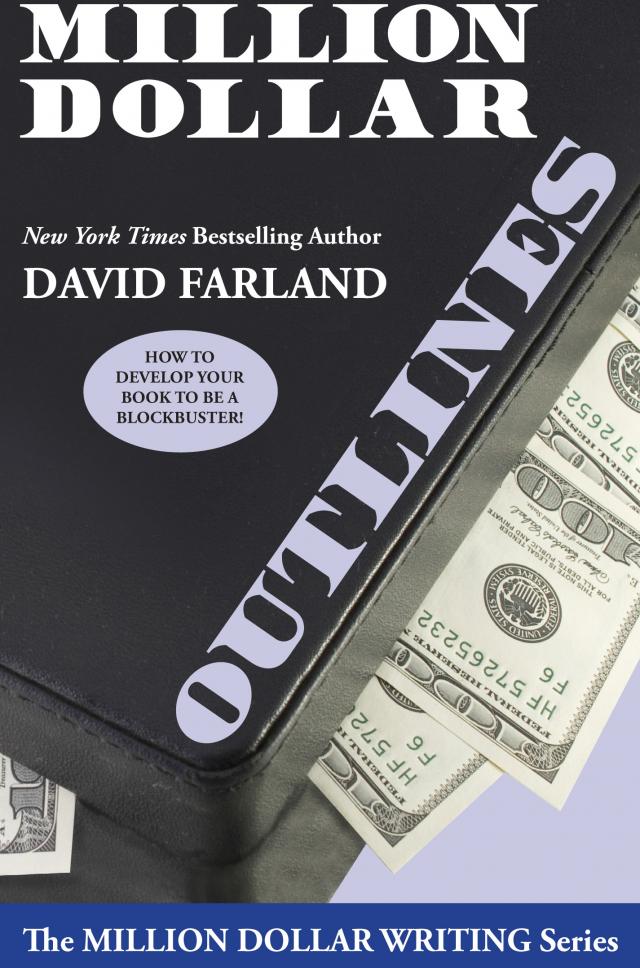
Bestselling author David Farland has taught dozens of writers who have gone on to staggering literary success, including such #1 New York Times Bestsellers as Brandon Mull (Fablehaven), Brandon Sanderson (Wheel of Time), James Dashner (The Maze Runner) and Stephenie Meyer (Twilight).
In this book, Dave teaches how to analyze an audience and outline a novel so that it can appeal to a wide readership, giving it the potential to become a bestseller. The secrets found in his unconventional approach will help you understand why so many of his authors go on to prominence.
By David Farland
Smashwords Edition – 2014
WordFire Press
wordfirepress.com
ISBN: 978-1-61475-175-5
Copyright © 2013 by DFE
All rights reserved. No part of this book may be reproduced or transmitted in any form or by any electronic or mechanical means, including photocopying, recording or by any information storage and retrieval system, without the express written permission of the copyright holder, except where permitted by law. This novel is a work of fiction. Names, characters, places and incidents are either the product of the author’s imagination, or, if real, used fictitiously.
This book is licensed for your personal enjoyment only. This ebook may not be re-sold or given away to other people. If you would like to share this book with another person, please purchase an additional copy for each recipient. Thank you for respecting the hard work of this author.
Cover images by Shutterstock
Cover design by Kevin J. Anderson
Book Design by RuneWright, LLC
www.RuneWright.com
Kevin J. Anderson & Rebecca Moesta, Publishers
Published by
WordFire Press, an imprint of
WordFire, Inc.
PO Box 1840
Monument, CO 80132
Contents
Book Description
Title Page
The Million Dollar Writing Series
Foreword
Overview
How this Manual is Organized
Section 1: What Makes a Bestselling Story?
Introduction: Writing as a Form of Entertainment
What is Entertainment?
What Is a Story, and How Does it Work?
On Story Types Versus Shapes
Defining a Million-Dollar Property
Why Do Research for Becoming a Bestseller?
Audience Analysis: Novels
Using Emotional Draws
Pulling it All Together
Section 2: Identify the Elements that Help You Plot Your Story
Elements of a Story
Brainstorming Your Settings
Building Characters
Finding Themes in Your Tale
Novel Plotting Tools
Section 3: The Plotting Process
Promising Starts to a Novel
Story Middles
Ending Your Story Well
Writing a Million Dollar Outline
Appendix: Taking a Story from Idea to Completion
Exercises to Increase Productivity
About David Farland
Other WordFire Press Books
The Million Dollar Writing Series
When seeking advice, always consider the source. Many self-appointed “experts” write how-to books without themselves ever accomplishing the thing they are trying to teach you how to do.
In the Million Dollar Writing Series, each of our authors has sold a minimum of one million dollars of commercial product in their field. They have proved themselves, and here they share their wisdom, advice, and experience with you.
There are many factors in becoming a successful writer, and we cannot guarantee that you’ll break into the top levels, but we hope you find the advice to be useful and enlightening.
Foreword
David Farland has trained dozens of New York Times bestselling authors over the years—people like Stephenie Meyer (Twilight), Brandon Sanderson (Wheel of Time), and Brandon Mull (Fablehaven) all came to him before they had ever sold a novel, then went on to make millions.
As a greenlighting analyst, David Farland worked helping with novels and films (as a consultant he urged Scholastic to push Harry Potter big, long before they were willing to do so).
And as a videogame designer he helped create stellar games like Starcraft: Brood War.
Eventually, people began asking him to teach a class on how to integrate high-level audience analysis into the design of a new intellectual property—a book or movie—and his popular writing course “Million-Dollar Outlines” was born.
This book is used during the course as a reference, a refresher for many of the main ideas. An earlier edition was hastily thrown together. This new edition is heavily rewritten, and hopefully will help you learn not just how to outline, but how to begin tweaking your work in major intellectual properties before you ever begin writing.
Overview
What Kind of Writer Are You?
Let’s face it: there are a lot of places where you can learn to outline a story. I’ve read books on the topic, studied card systems used in Hollywood, and even computer programs that can all teach you how to outline well.
In fact, I bought a program recently for $70 that did a pretty decent job of teaching you how to create a good working outline—but only if you wanted to write a “hero journey” story. It wasn’t much help in writing romances or comedies or several other types of tales.
So this book can help you to outline any story, but more importantly it also seeks to explain to you why some story ideas are better than others. Why do some ideas electrify wide audiences while others leave readers scratching their collective heads? How can you tell the difference so that you don’t waste your time writing a book or screenplay that has an audience of just one?
To understand this, I need to get into the basic psychology of storytelling, taking you much deeper than your average “how to” manual or software does.
This requires that you first learn what constitutes a potential bestseller, recognize the qualities of a good story, and then learn how to outline it in such a way as to bring out the best in it.
So, long before we ever talk about outlining, we’re going to spend dozens of pages on audience analysis and story theory.
You may be wondering if this book is for you. I’ll be honest: maybe it isn’t. Read the next page to find out why.
Two Approaches to Storytelling
There are two major approaches for writing a story: discovery writing and outlining. Neither approach is completely right nor wrong, and most authors take a hybrid approach. So let’s discuss each approach, along with its strengths and pitfalls.
Discovery Writers
A discovery writer is one who likes to begin a story without really knowing where it will end. Stephen King is an excellent example of a discovery writer. Such writers enjoy the process of “discovering” the story as it unfolds. Often, a writer who is deeply involved in a novel will be writing about a character and suddenly recognize that unexpected things are happening: the killer in a mystery turns out to be the protagonist himself, or the hero actually fails in his quest.
Discovery writing is an excellent way to create stories that feel organic. Characters often tend to come out well-rounded in discovery stories, and settings come to life.
However, I’ve known countless discovery writers who have problems with weak middles and sluggish endings because they didn’t control where the story was going; or maybe the writer may take ages to write a novel because they end up following characters down blind alleys.
Very often, in discovery novels the focus on the primary character’s shifts from one protagonist to another over the course of the novel, or the major conflicts that the author started with aren’t the ones that get resolved. When this happens, the reader feels cheated because the author hasn’t kept the promises that were set up at the beginning of the tale.
Yet many authors find that extra enjoyment in taking this approach because the story always feels fresh, vital, and alive. It makes the crafting of the tale fun, in and of itself, so that regardless of whether the piece sells, the work is enjoyable. So if you love the process of crafting the tale, this might be your favorite mode of writing.
Just remember that not all projects can be written through the discovery method. I’ve created a number of novels for major franchises like Star Wars and The Mummy. Some of them have earned hundreds of thousands of dollars. But franchise owners will insist on a beautiful outline before they greenlight a project.
If you are solidly in the camp of discovery writers, if you never want to learn to work in others’ franchises, then this book may be of no help to you at all. In working with writers, I find that about ten percent of them fit into this category. You probably know who you are: you may be the kind of writer who likes to write what are called “small” stories, intimate tales based upon your own past, your own personal life. Or like Stephen King, maybe you just enjoy the process of discovery so much that it becomes your primary drive for writing. It becomes addictive.
If this describes you, don’t waste your time and money on this book.
Outline Writers
Outlining writers enjoy creating a story by considering how to develop an engrossing tale, told at a great pace, with jaw-dropping plot twists. For them, plot is often paramount. There are plenty of plotting writers on the bestseller lists—people like Kevin J. Anderson or Ken Follett. For outliners, the fun of writing often comes in the pre-writing phase, where they sit and think, “Wouldn’t it be cool if…?”
The strengths of outlining are that numerous. It is often both easier and faster to draft a book or screenplay based upon an outline because you know exactly where the story is going. There are fewer pitfalls and temptations to rewrite, since you’re not following characters down blind alleys. Writing from an outline makes the author more productive.
Sometimes, big stories can be sold on the basis of an outline alone, so that the writer can get paid for doing his work well in advance. A “proven” writer can make deals for millions of dollars based upon an exciting outline.
The weakness of outlining is that for some authors the process of writing that first draft can begin to feel mechanical—as if it is too much like a regular day job. As a critic, I find that stories written from outlines can feel a bit “thin,” as if the characters and scenes exist only to forward the plot. So as a writer, you need to guard against that.
In other cases, the author is so excited to get the plot down on paper, that the prose itself is deficit. The character voices may be weak and unformed, the sentence structures hastily written and inelegant. In other words, the author is so excited about getting something on paper that he doesn’t give proper consideration as to his tale.
One other weakness of outlining is that once the outline is complete, the author may feel that the story has already been invented, and he no longer needs to write it. One writer in Hollywood was known for creating great plots, which he would tell his friends in bars or at dinner parties. But after he had perfected his tale through three or four tellings, he no longer felt the need to write it all—and thus would ignore it forever. He’d lost the excitement. His friends were always amazed at the number of great movies he created—none of which ever made it to a first draft.
But there are ways to combine the advantages of both approaches to writing.…
Taking a Middle Ground
Many authors will take a hybrid approach to writing, using some outlining methods but leaving themselves open to free-write.
For example, you might find that you can outline just the world for your story. Whether you set your tale in a fantasy world, or in twelfth century Germany, or in a far-future dystopia, the world is not likely to change. Yet your characters and societies and their resulting conflicts will all grow out of that world. So you can develop a wonderfully detailed milieu, with wars and major conflicts and maps and notes on various subcultures and political rivalries and religions—and even have a strong idea of where your story is going—yet you may choose to “discover” who your characters are. Or maybe as you sit and think about how to best describe that world, you’ll create elaborate set pieces of description, bringing your world to a life more deeply than you anticipated, making new discoveries about it.
In short, you may outline much of the tale, but leave some parts to discover. Tolkien seemed to work this way, creating Middle Earth and some of his characters long before he wrote Lord of the Rings.
I personally will often outline a novel in thirds—so that I know where I’m going with opening scenes, but then stop partway through to consider how to handle the next stage of a tale. I know from long experience that by the time that I reach the middle of my novel, I will have changed emphasis and direction often enough so that I will need to “discover” what happens next. I almost never give my “themes” any thought before I begin, and so I often discover the theme of my tales, and the controlling metaphors as a I write. All of which means that I don’t quite know how it will all end—not really.
In any case, any one of these approaches—discovery writing, outlining, or a hybrid approach—can work beautifully for a professional writer.
You as an author may need to discover through trial and error which technique you enjoy most.
So this book will teach you how to outline in an effort to increase your productivity and the value of your finished product, as well as to discover new revenue streams. More importantly, it strikes at how to recognize and develop those great ideas that form the core of a blockbuster intellectual property.
How this Manual is Organized
The process of inventing a novel doesn’t all occur in one neat little step.
Before you can outline a story, you need to “brainstorm” it. The brainstorming process is a creative one—a right-brain function that comes often over weeks and months as you think about what you’d like to write. You’ll get a flash of a scene that appears in your mind, like the piece to a jigsaw puzzle. Later you might come up with an intriguing idea for a character, or maybe a plot twist, and each of those are pieces to the puzzle, too.
Not all of the pieces that you find fit together neatly. It’s like that crate full of puzzles that my mother used to keep—with dozens of old puzzles all thrown together.
But eventually you find some that fit, and others you craft from scratch, and you begin putting each of these pieces together into a coherent story.
These images and twists and characters and events are the meat of your plot, and coming up with them may take weeks or months. In fact, you’ll keep getting new ideas as you write your novel or screenplay, and perhaps even long after. For example, twenty years ago I wrote a two-novel series with the books Serpent Catch and Path of the Hero. Last summer I woke up one night and realized that “If I just added this scene, it would really smooth out the transition between those novels.”
Of course, no one rewrites novels after twenty years. We have to get the book onto the shelves. The same is true with movies. There is a saying in Hollywood: “Movies are never finished, just abandoned.” Most filmmakers are editing their movie right up to within a day or two of its distribution.
So creating a strong outline is a process that often starts out strong, but really can take time. Revision of your story, even in outline form, is an important part of the creative process. A few years ago I was talking to Frank Frazetta, one of the greatest fantasy illustrators of all time. I was gazing at some of his paintings and noticed that they had changed subtly since they had been first published in the 1970s.I asked him about it, and he said, “Oh, yes, I take them out every few months and work on them. I might put a new wash over sections to deepen and bring out the color, or I might add a few highlights or new details.” After thirty years, he was still creating his paintings.
You’ll have the same urge to continue working on your outline, too. Try not to take too long in this process.
As you write the first draft, you’ll normally recognizes weaknesses in your outline and correct them then. Don’t drag out the process for years.
But before you start your work, you need to get some basic ideas of what the shape of your story might be, who your characters are, what settings you want to describe, and so on.
While creating a story is a right-brain process, the act of outlining it in a logical fashion takes place in the left hemisphere of the brain.
Your goal then is to generate enough information in the creative half of your brain so that the logical portion of your mind can study the tale, recognize weaknesses, and make it strong enough to become a bestseller.
So our organization follows certain steps.
Step 1: Identify what Elements make a Bestseller.
In the first section of this course, we’ll look at storytelling from a theoretical point of view, to try to understand how to tell stories that will please a wide audience. We’ll also study bestselling movies and books and find the characteristics that are common to bestsellers.
Step 2: Identify the Elements that Let You Plot a Story.
Most books and computer programs on plotting give you a general idea of how plots work. But in this book we get into much more detail. We don’t just study overall story shape or how to create character arcs, we get into how plotting devices can be used to bolster any plot and make your story more interesting.
Step 3: Plot.
As you study step one and two, you will undoubtedly get more and more ideas about how to handle your own story. The puzzle pieces will begin to fit together. You’ll think about the basic shape and form of your story. You’ll consider how to develop try/fail cycles, and how you might use various plotting devices to strengthen the tale. So in this third step, we get into the thick of it and develop an outline.