Mother Country

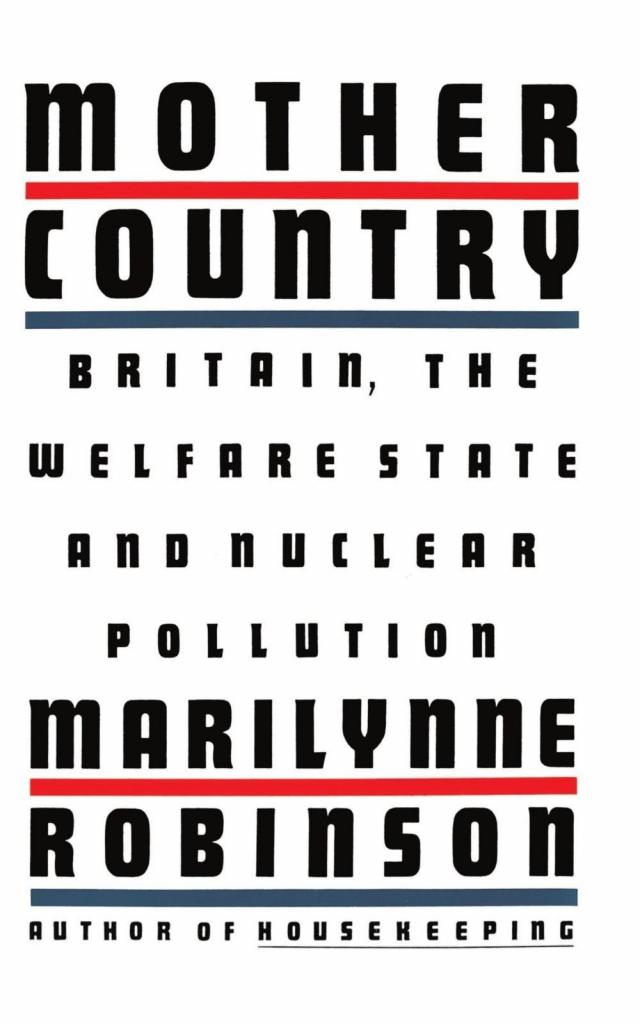
Mother Country

Marilynne Robinson

Fiction / Religion / Essays

In this powerful, eloquent, and elucidating essay, Marilynne Robinson has pinpointed exactly the motives and the mythology and the reality behind the destruction of our planet. The Sellafield nuclear reprocessing plant in Great Britain is a perfect metaphor for twentieth-century genocide. Not the small, insane eruptions of eradication that took place in Hitler's Germany, but rather that routine, day-to-day, thoroughly "democratic" envenomation of the planet by a current industrial magic (encouraged, or at least condoned, by almost everybody), which threatens to terminate everything on earth in the quite foreseeable future. Robinson's book is as powerful a contribution to the literature of revelation and protest as was that seminal photographic essay by W. Eugene and Aileen Smith on Minamata's disease fifteen years ago. It is as bloodcurdling as Rachel Carson's Silent Spring, as thought-provoking and prophetic as the best works of people like Barry Commoner and Loren Eiseley. This is a work of great intelligence and fine investigative reporting. It is also a lucid interpretation of history, and very important in its discussions of the roots of current dilemmas. And lastly, Mother Country is courageous, and marvelous literature at its best.  
Read online
  • 55
Lionel Asbo

Lionel Asbo

Martin Amis

Fiction / Essays / Contemporary

A savage, funny, and mysteriously poignant saga by a renowned author at the height of his powers. Lionel Asbo, a terrifying yet weirdly loyal thug (self-named after England's notorious Anti-Social Behaviour Order), has always looked out for his ward and nephew, the orphaned Desmond Pepperdine.  He provides him with fatherly career advice (always carry a knife, for example) and is determined they should share the joys of pit bulls (fed with lots of Tabasco sauce), Internet porn, and all manner of more serious criminality.  Des, on the other hand, desires nothing more than books to read and a girl to love (and to protect a family secret that could be the death of him).  But just as he begins to lead a gentler, healthier life, his uncle—once again in a London prison—wins £140 million in the lottery and upon his release hires a public relations firm and begins dating a cannily ambitious topless model and “poet.” ...
Read online
  • 54
In Good Hands With My Dad's Best Friend (BBW Contemporary Medical Taboo Romance)

In Good Hands With My Dad's Best Friend (BBW Contemporary Medical Taboo Romance)

Ava May

Nonfiction / Writing / Essays

Get your Taboo Romance fix NOW with this naughty standalone Older Man Younger Woman Romance between a BBW teacher and her Dad's Sexy Doctor Best Friend.Jan’s life is ordinary and she likes it that way. She goes to her job, teaching children, and then home to her comfortable apartment. It may be the status quo, but that is just fine with her. Her generous curves haven’t had the boys flocking to her, but she’s happy being single.When one of Jan’s students is injured, the hospital visit brings her face to face with Dr. Keith, her father’s best friend. Jan has known him forever, but their attraction explodes on this tense night. Find out what happens when the two of them discover their desire for each other, even if it might be a little taboo… Warning: contains mature themes and language. Intended for 18+ readers only.Standalone. No Cliffhangers.
Read online
  • 50
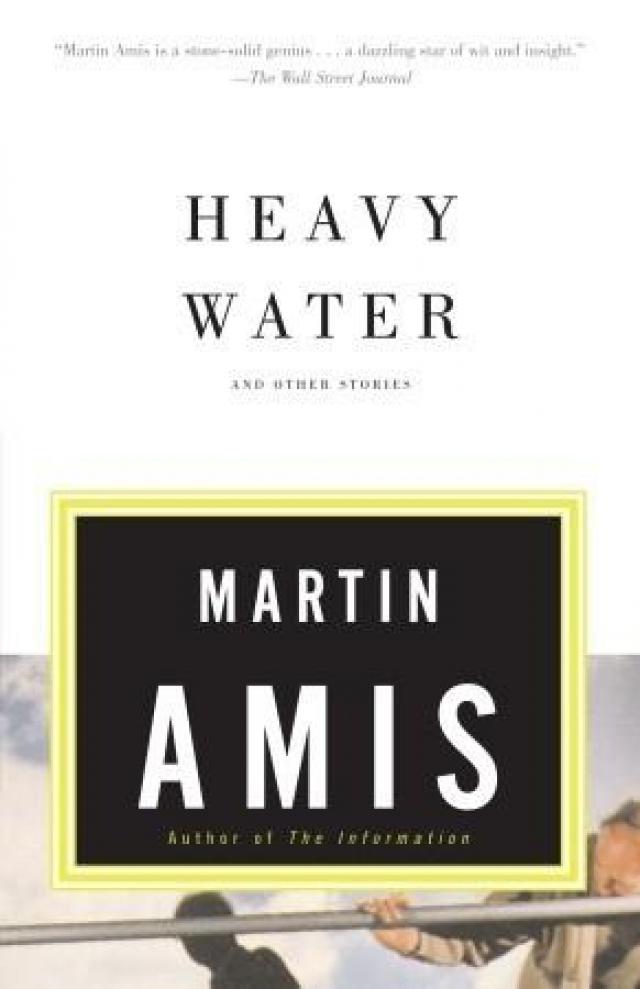
Heavy Water and Other Stories

Heavy Water and Other Stories

Martin Amis

Fiction / Essays / Contemporary

FB2Library.Elements.CiteItem In this wickedly delightful collection of stories, Martin Amis once again demonstrates why he is a modern master of the form. In “Career Move,” screenwriters struggle for their art, while poets are the darlings of Hollywood. In “Straight Fiction,” the love that dare not speak its name calls out to the hero when he encounters a forbidden object of desire—the opposite sex. And in “State of England,” Mal, a former “minder to the superstars,” discovers how to live in a country where “class and race and gender were supposedly gone.” In Heavy Water and Other Stories , Amis astonishes us with the vast range of his talent, establishing that he is one of the most versatile and gifted writers of his generation.
Read online
  • 49
God Is Not Great

God Is Not Great

Christopher Hitchens

Politics / Essays / Journalism

In the tradition of Bertrand Russell’s Why I Am Not a Christian and Sam Harris’s recent bestseller, The End of Faith , Christopher Hitchens makes the ultimate case against religion. With a close and erudite reading of the major religious texts, he documents the ways in which religion is a man-made wish, a cause of dangerous sexual repression, and a distortion of our origins in the cosmos. With eloquent clarity, Hitchens frames the argument for a more secular life based on science and reason, in which hell is replaced by the Hubble Telescope’s awesome view of the universe, and Moses and the burning bush give way to the beauty and symmetry of the double helix.
Read online
  • 49
Titian

Titian

John Berger

Fiction / Essays / Art

This book is first a dialogue between a daughter and a father about life, physical sensation, mortality. Both seem to listen to the other with great attention. Secondly it is the extraordinary vehicle for a series of insights into the everyday life and the art of the great Venetian master, following an uncanny incident at the large exhibition of his work staged in Venice in 1990. While attending the exhibition Katya meets an old man, who she becomes convinced can only be the ghost of the great painter. Her 'spiritual' visitor engages her in conversation about the minute particularities of painting some of the pictures there. She shares this experience with her father in a letter. He accepts the encounter at face value and discusses the historical background to the old man's remarks, seeking answers to a series of evidential questions about his daughter's encounter.
Read online
  • 48
Gilead (2005 Pulitzer Prize)

Gilead (2005 Pulitzer Prize)

Marilynne Robinson

Fiction / Religion / Essays

SUMMARY:In 1981, Marilynne Robinson wrote Housekeeping, which won the PEN/Hemingway Award and became a modern classic. Since then, she has written two pieces of nonfiction: Mother Country and The Death of Adam. With Gilead, we have, at last, another work of fiction. As with The Great Fire, Shirley Hazzards's return, 22 years after The Transit of Venus, it was worth the long wait. Books such as these take time, and thought, and a certain kind of genius. There are no invidious comparisons to be made. Robinson's books are unalike in every way but one: the same incisive thought and careful prose illuminate both. The narrator, John Ames, is 76, a preacher who has lived almost all of his life in Gilead, Iowa. He is writing a letter to his almost seven-year-old son, the blessing of his second marriage. It is a summing-up, an apologia, a consideration of his life. Robinson takes the story away from being simply the reminiscences of one man and moves it into the realm of a meditation on fathers and children, particularly sons, on faith, and on the imperfectability of man. The reason for the letter is Ames's failing health. He wants to leave an account of himself for this son who will never really know him. His greatest regret is that he hasn't much to leave them, in worldly terms. "Your mother told you I'm writing your begats, and you seemed very pleased with the idea. Well, then. What should I record for you?" In the course of the narrative, John Ames records himself, inside and out, in a meditative style. Robinson's prose asks the reader to slow down to the pace of an old man in Gilead, Iowa, in 1956. Ames writes of his father and grandfather, estranged over his grandfather's departure for Kansas to march for abolition and his father's lifelong pacifism. The tension between them, their love for each other and their inability to bridge the chasm of their beliefs is a constant source of rumination for John Ames. Fathers and sons. The other constant in the book is Ames's friendship since childhood with "old Boughton," a Presbyterian minister. Boughton, father of many children, favors his son, named John Ames Boughton, above all others. Ames must constantly monitor his tendency to be envious of Boughton's bounteous family; his first wife died in childbirth and the baby died almost immediately after her. Jack Boughton is a ne'er-do-well, Ames knows it and strives to love him as he knows he should. Jack arrives in Gilead after a long absence, full of charm and mischief, causing Ames to wonder what influence he might have on Ames's young wife and son when Ames dies. These are the things that Ames tells his son about: his ancestors, the nature of love and friendship, the part that faith and prayer play in every life and an awareness of one's own culpability. There is also reconciliation without resignation, self-awareness without deprecation, abundant good humor, philosophical queries--Jack asks, "'Do you ever wonder why American Christianity seems to wait for the real thinking to be done elsewhere?'"--and an ongoing sense of childlike wonder at the beauty and variety of God's world. In Marilynne Robinson's hands, there is a balm in Gilead, as the old spiritual tells us. --Valerie Ryan
Read online
  • 47
N.W.

N.W.

Zadie Smith

Fiction / Essays

Twenty-first century London: rich and poor, black and white, joyful and melancholy, boring and deviant—occasionally lethal. Somewhere in the northwest of the city stands the Caldwell housing estate, a relic of '70s urban planning. Leah, an administrator for the lottery, grew up there. So did her best friend, Natalie, now a barrister, and Felix, an MG car mechanic. Thirty years later these Caldwell kids and their partners live only a few streets apart, yet inhabit separate worlds. Until the day a desperate local woman comes to Leah's door seeking help—and forces Leah out of her isolation. But is Shar a stranger or a friend? Sincere or a fraud? A connection to the past or a threat to the future? From private dinner tables to public parks, at work and at play, in this delicate but devastating novel of encounters Zadie Smith's Londoners find themselves navigating an increasingly atomized society. For some the city remains a place of happy accidents and chance good...
Read online
  • 47
A Fortunate Man

A Fortunate Man

John Berger

Fiction / Essays / Art

In 1966 John Berger spent three months in the Forest of Dean shadowing an English country GP, John Sassall. Sassall is a fortunate man - his work occupies and fulfils him, he lives amongst the patients he treats, the line between his life and his work is happily blurred. In A Fortunate Man, Berger's text and the photography of Jean Mohr reveal with extraordinary intensity the life of a remarkable man. It is a portrait of one selfless individual and the rural community for which he became the hub. Drawing on psychology, biography and medicine A Fortunate Man is a portrait of sacrifice. It is also a profound exploration of what it means to be a doctor, to serve a community and to heal. With a new introduction by novelist and GP, Gavin Francis.
Read online
  • 45
183